Mr. Potato Head: School Rush
PlayDate Digital Inc.Education
3.821.00 Reviews
- Version
- 1.0.10
- Installs
- 10.00K
- Age Rating
- Everyone
Screenshots
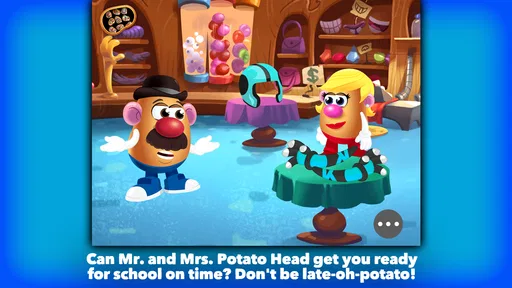
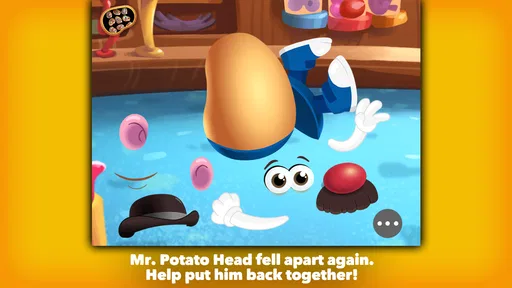
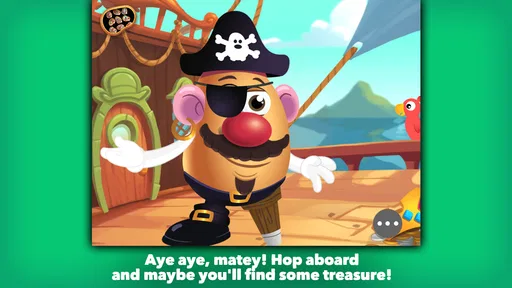

Our Review of Mr. Potato Head: School Rush
 Analysis by Appyee
I tend to judge a mobile game by whether it fits into the small gaps in an ordinary day, and Mr. Potato Head: School Rush has an easy-to-understand premise for those moments. It is an education-category app from PlayDate Digital Inc., built around a familiar toy character and quick running-game action. I can see it appealing to a parent looking for a playful, recognizable activity to share with a child, as well as to an adult who enjoys a light dose of nostalgia. Its simple idea is inviting, though the best choice depends on what you want from a children’s app and how much you value a game that can be used without an active connection.
When the connection matters
The core appeal is the run itself: steer Mr. Potato Head past obstacles, gather pieces and try to make it to school. That kind of play is easy to understand without a long setup, which makes the app approachable when a child wants to start quickly. Connectivity is a separate practical question. I would not assume that every part of the experience works without a network; if you are planning to use it somewhere with unreliable service, try it at home first and see how it behaves on your device.
This is especially useful before a car ride, a waiting-room visit or a trip where mobile coverage may come and go. A quick test lets you find out whether the app opens and reaches the play you want in your usual circumstances, rather than discovering a loading delay when a child is already waiting. I also would not make the game the only planned activity for a long journey: its appeal is focused on repeat runs, so having a book, drawing activity or another offline option nearby is sensible.
Small-screen play in everyday settings
The swipe controls are a good match for a phone because they ask for simple, direct gestures: left and right to move, up to jump, and down to slide. That reduces the amount of explanation needed for a child who is still learning a game. In practice, I would introduce one gesture at a time and let the child try a short run before explaining every obstacle. That keeps the first attempt from feeling like a lesson in controls.
For a parent, the most natural use is a brief shared turn rather than handing over the phone with no context. You can take turns, ask the child to choose a look for the character, and then let them guide a run. This also helps with the game’s quick pace: an adult can demonstrate a swipe when a child hesitates, without taking over the whole activity. The bright scenes and familiar character give you something concrete to talk about, even if the child is more interested in the toy-like customization than in beating a run.
What to do if a session is interrupted
Mobile play rarely happens in a perfect setting. A notification, a call, a device change or a weak connection can interrupt a session, and I would avoid promising that progress will resume in a particular way because that can depend on the device and how the app handles the interruption. If a run stops unexpectedly, reopen the app and check what is available before assuming anything has been lost. For a child, it helps to set expectations that a run is a short attempt, not a long story that must be completed in one sitting.
There is a useful distinction here between a game being easy to pick up and being dependable in every network situation. The straightforward controls support quick restarts, but they do not answer questions about connection behavior. I would test the app before relying on it as a distraction during a flight, commute or other setting where restarting or troubleshooting would be inconvenient. That small bit of preparation matters more than it might for a purely static picture-book app.
Being thoughtful about data and spending
The app costs $3.99, and in-app purchases are listed at $3.99 per item. That makes it worth checking the purchase controls on the device before giving a young child unsupervised access. I would also review how the app behaves on your own connection before letting it run on mobile data, particularly if you are trying to keep a child’s screen time or data use predictable. This is a practical household check, not a reason to assume that the game constantly uses data.
At home, using a familiar Wi-Fi connection for the first launch and initial exploration is a low-effort way to avoid surprises. If you are comparing it with free children’s games, the upfront price is a clear trade-off: you are paying for this specific Mr. Potato Head-themed experience, while free alternatives may rely on different designs or purchase models. I would choose based on whether the character and running format are likely to hold a particular child’s interest, rather than treating the price alone as proof of value.
The game is rated Everyone, which suits its broad family framing, but age suitability is still personal. A younger child may enjoy the character and colors while needing help with timing and swipes; an older child may quickly want more variety or a deeper goal. For that reason, I would try a session together before deciding whether it earns a regular place on the home screen. A rating can help set expectations, but a short shared playtest tells you much more about fit.
It is also useful to think about what the child is seeking. If they want a fast reaction game with a recognizable character, the running format makes sense. If they want a calm read-along, a drawing tool or an open-ended creative activity, this is not a substitute. The school-bound premise gives each run a simple direction, but the main activity remains dodging obstacles and collecting items, rather than following a long narrative or practicing a specific school skill.
Gameplay and Mechanics
So, what's the deal with Mr. Potato Head: School Rush? Imagine our beloved Mr. Potato Head, but now he's on a mission to make it to school on time. The game is a blend of classic running mechanics with a quirky twist. You guide Mr. Potato Head through various obstacles, collecting parts and accessories along the way. It’s all about speed and precision, and I have to admit, it's pretty darn addictive.
The controls are super intuitive. You swipe left or right to move, swipe up to jump over obstacles, and swipe down to slide under them. The learning curve is minimal, which is great because it means kids can jump right in without much hassle. But don't be fooled—it gets challenging pretty fast!
Graphics and Sound
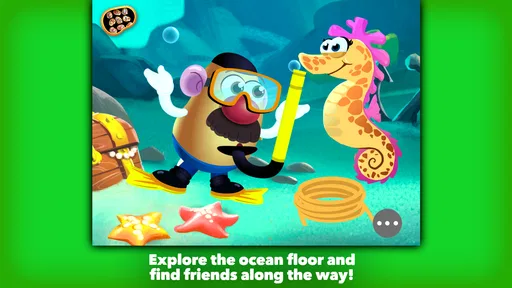
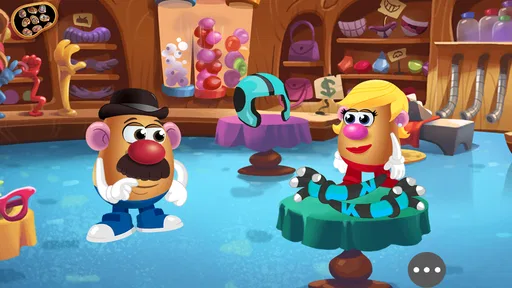
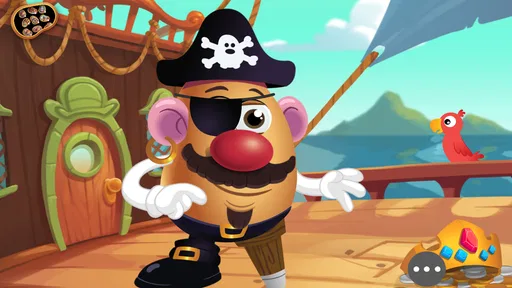
One of the first things I noticed was the vibrant graphics. The colors are bright, and the characters are designed with a lot of detail. It's like Mr. Potato Head has jumped straight from the toy box onto your screen. The backgrounds are diverse, taking you through different environments like the school hallway, playground, and even a whimsical science lab.
The sound effects and music are spot-on too. The cheerful tunes keep you engaged, and the sound of Mr. Potato Head collecting his parts is oddly satisfying. If you’re anything like me, you’ll find yourself humming the tunes even when you’re not playing!
Customization and Features
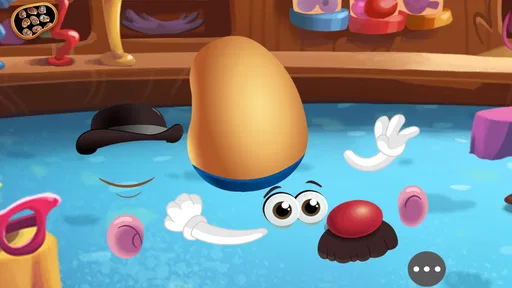
One of the coolest features is the level of customization available. You can mix and match different parts to create your own unique Mr. Potato Head. Whether you want him to wear a silly hat or some funky glasses, the possibilities are endless. This aspect really adds a personal touch to the game, and I found myself spending quite a bit of time just playing around with different looks.
The game also includes various power-ups that you can use to boost your performance. Whether it’s a speed boost or a magnet that attracts all nearby accessories, these power-ups can make a big difference in your run. And trust me, you’ll want to collect as many as you can because the competition gets fierce!
Why It Stands Out
So, what makes this game stand out in the crowded world of mobile games? For me, it’s the perfect blend of nostalgia and innovation. It brings back fond memories of playing with Mr. Potato Head while offering a fresh and engaging gameplay experience. Plus, the ability to customize your character adds a layer of fun that keeps you coming back for more.
Another thing I appreciate is how family-friendly it is. It’s a game that you can feel comfortable letting your kids play, but it’s also challenging enough to keep adults entertained. It’s a rare find, and that’s what makes it special.
Where it fits among children’s games
Compared with a storybook app that asks a child to listen, read or turn pages at a measured pace, this one puts more emphasis on reflexes and repeated attempts. Compared with a broad arcade runner, the Potato Head theme and character customization give it a more toy-like personality. That difference matters: it is a better fit for a child who likes making silly character combinations and reacting to obstacles than for one who wants a quiet bedtime activity.
The customization also offers a useful way to make a short session feel personal without changing the basic task. I would let a child pick a look before starting, then move straight into a run rather than spending the whole session browsing choices. That creates a small ritual—choose, play, compare the result—that can make a quick turn feel complete. The trade-off is that customization does not necessarily make the running itself more varied, so a child who tires of the core action may still move on quickly.
There is a similar trade-off with the power-ups. They give a run extra momentum and can make collecting accessories feel more rewarding, but they also add another thing to notice while a player is learning to dodge. For a first session, I would focus on the basic movement and introduce power-ups naturally as they appear. If a child is already comfortable with swiping, those boosts can make attempts feel livelier; if not, they may be background noise rather than a meaningful feature.
Who is likely to enjoy it
I would recommend giving it a try if your household already likes Mr. Potato Head, if a child enjoys bright arcade-style play, or if you want an activity that an adult and child can understand together without lengthy instructions. The short-run structure suits spare moments after school or while waiting for food, provided the device is available and the setting allows a little screen time. It can also work as a nostalgic pick for adults who want something light rather than a demanding game.
I would skip it if your priority is a substantial educational curriculum, a deep story, or a guaranteed offline activity for travel. The education category does not mean that every session is a lesson, and the school setting should not be mistaken for structured teaching. Likewise, if a child becomes frustrated by quick reactions or repeated attempts, a slower puzzle or interactive reading app may be kinder. The better choice is the one that matches the child’s mood, not the one with the most familiar character.
For a realistic everyday example, imagine a child has finished a snack and there are a few minutes before leaving the house. I would start a run together, let them choose a character look, and give them one simple goal: watch the path and try the jump or slide when needed. If they enjoy it, they can take another turn; if the pace proves too demanding, you can stop without leaving a long story unfinished. This kind of brief, shared use plays to the game’s strengths without expecting it to occupy an entire afternoon.
Practical details before you install
PlayDate Digital Inc. developed this education app, which was released on June 15, 2016. Its current version is 1.0.10 and it requires iOS 8.0 or later. The average rating is 3.8 from around a hundred ratings, with a few dozen written reviews, and it has passed ten thousand installs. Those figures suggest a modest audience rather than a universal hit, so I would treat them as context and make the decision based on the kind of play your family actually enjoys.
Before paying, I would check that the app is compatible with the device you plan to use and make sure the purchase is approved by the person responsible for the device. If it is for a child, set a clear expectation about whether they may make additional purchases; the per-item price makes that a sensible precaution. I would also open the app once in the setting where you expect to use it, especially if network access is uncertain, rather than relying on assumptions about loading or recovery.
One question parents often have is whether this will keep a child occupied for a long stretch. I would not count on that: its appeal is a focused running challenge, and a child’s interest will depend on how much they enjoy repeating runs and changing the character’s look. Another practical question is whether it suits a very young player. The gestures are simple, but the increasing challenge means a younger child may benefit from an adult nearby, at least at first. A short trial is the fairest way to judge both points.
Final Thoughts
In conclusion, if you’re looking for a game that’s both nostalgic and entertaining, you can’t go wrong with this one. It’s packed with fun, offers a good challenge, and has enough customization options to keep things fresh. Whether you’re a fan of the original toy or just love a good endless runner, this game is definitely worth considering. So why not give it a try and see how quickly you can get Mr. Potato Head to school?
Happy gaming!
Verdict
Strengths of Mr. Potato Head: School Rush
- Engaging storyline keeps kids entertained.
- Colorful graphics appeal to young users.
- Simple controls make it easy to play.
- Promotes creativity and imagination.
- Educational content subtly integrated.
Limitations of Mr. Potato Head: School Rush
- Limited levels may reduce replay value.
- In-app purchases can be costly.
- Requires internet for full features.
- Advertisements interrupt gameplay.
- May not challenge older children.
Similar Picks in This Category
View All
Duolingo: Language Lessons
Duolingo4.7

Google Classroom
Google LLC2.8

Unacademy: Learn & Crack Exams
Unacademy3.2

Bible App for Kids
Life.Church4.4

Cake - Learn English & Korean
Cake Corp.4.7

Brainly: AI Homework Helper
Brainly4.5
Frequently Asked Questions
What is the main objective of Mr. Potato Head: School Rush?
Mr. Potato Head: School Rush is an educational game designed to engage children in creative play while learning. The main objective is for players to help Mr. Potato Head navigate through various school-themed levels, solving puzzles and completing tasks that enhance problem-solving skills and creativity.
Is Mr. Potato Head: School Rush suitable for all age groups?
The game is primarily targeted towards younger children, typically ages 3 to 8. It features simple controls and age-appropriate content, making it ideal for early learners. However, older children and even adults might enjoy the nostalgic and creative aspects of the game as well.
Does Mr. Potato Head: School Rush require an internet connection?
No, Mr. Potato Head: School Rush does not require an internet connection to play. This makes it a great option for on-the-go entertainment, as children can enjoy the game during travel or in places without reliable internet access.
Are there any in-app purchases in Mr. Potato Head: School Rush?
Yes, the game includes optional in-app purchases. These allow users to unlock additional content, such as new levels or customization options for Mr. Potato Head. Parents should be aware of these purchases and can disable them through device settings if desired.
What platforms is Mr. Potato Head: School Rush available on?
Mr. Potato Head: School Rush is available for both Android and iOS devices. Users can download the game from the Google Play Store for Android devices or the Apple App Store for iOS devices, ensuring compatibility with a wide range of smartphones and tablets.
